
Mounjaro and Pancreatic Cancer: Is there a link?

The "King Kong" of weight loss medications, Mounjaro (tirzepatide), is a dual GIP and GLP-1 receptor agonist licensed in the UK for treating type 2 diabetes mellitus and for weight loss. As with any medication affecting pancreatic function, questions have emerged regarding potential links between Mounjaro and pancreatic cancer.
Current evidence from clinical trials and regulatory reviews does not establish a causal relationship between tirzepatide and pancreatic malignancy. Let's look at the pancreatic cancer risk factors in the context of diabetes treatment, and if/when to seek medical advice whilst taking Mounjaro.

How Does Mounjaro Work?
Mounjaro (tirzepatide) is a prescription medicine licensed in the UK for weight loss and for the treatment of type 2 diabetes mellitus. Other medications have different brands for different uses e.g. Victoza for diabetes and Saxenda for weight loss. Mounjaro represents a novel class of medication known as a dual glucose-dependent insulinotropic polypeptide (GIP) and glucagon-like peptide-1 (GLP-1) receptor agonist.
The mechanism of action involves mimicking two naturally occurring incretin hormones that play crucial roles in glucose regulation and appetite control. When administered via subcutaneous injection once weekly, tirzepatide binds to both GIP and GLP-1 receptors on pancreatic beta cells, stimulating insulin secretion in a glucose-dependent manner. It also reduces glucagon secretion, which helps lower blood glucose levels.
Mounjaro slows gastric emptying, which helps regulate post-meal blood glucose spikes and promotes satiety. This delayed gastric emptying may affect the absorption of oral medications, including contraceptives. The medication also acts on areas of the brain involved in appetite regulation, contributing to reduced caloric intake and significant weight loss in clinical trials.
Whilst the glucose-dependent mechanism means insulin is released primarily when blood glucose levels are elevated, the risk of hypoglycaemia may increase when Mounjaro is used in combination with insulin or sulfonylureas. Dose adjustments of these medications may be necessary when starting tirzepatide.
The Medicines and Healthcare products Regulatory Agency (MHRA) approved Mounjaro following extensive clinical trial programmes demonstrating its efficacy and safety profile. As with all medications affecting pancreatic function and metabolism, ongoing pharmacovigilance continues to monitor for potential adverse effects.
Understanding the Link Between Mounjaro and Pancreatic Cancer

Concerns about a potential association between GLP-1 receptor agonists and pancreatic cancer emerged following post-marketing surveillance of earlier medications in this class. It is important to emphasise that there is no established causal link between Mounjaro and pancreatic cancer based on current evidence.
The European Medicines Agency (EMA) and other regulatory authorities have reviewed the available data on incretin-based therapies and found insufficient evidence to confirm a causal relationship with pancreatic cancer.
The pancreas contains GLP-1 receptors, and animal studies with GLP-1 receptor agonists have occasionally shown proliferative changes in pancreatic ductal cells and increased pancreatic mass. These findings raised questions about whether chronic stimulation of these receptors might theoretically increase cancer risk in humans. However, animal models do not always translate directly to human physiology, and the doses used in such studies often far exceed therapeutic levels.
Pancreatic cancer is a relatively rare but serious malignancy with a complex aetiology involving genetic, environmental, and metabolic factors. The disease often presents late with non-specific symptoms, making early detection challenging. Risk factors include smoking, chronic pancreatitis, family history, obesity, and diabetes itself—conditions that may overlap with the patient population prescribed Mounjaro.
This overlap creates a significant challenge in determining causality. Patients with type 2 diabetes have an approximately twofold increased risk of pancreatic cancer compared to the general population, independent of medication use. This baseline elevation in risk means that any observed cases of pancreatic cancer in patients taking Mounjaro must be carefully evaluated to distinguish between drug effect and underlying disease association. Regulatory bodies including the MHRA and EMA continue to monitor safety data closely, and current prescribing information does not list pancreatic cancer as a known adverse effect.
Clinical Evidence and Research on Mounjaro's Pancreatic Safety

The clinical trial programme for tirzepatide, including the SURPASS series of phase 3 trials, enrolled over 10,000 participants with type 2 diabetes and provided substantial safety data. No increased incidence of pancreatic cancer was observed in these controlled studies compared to placebo or active comparators.
The trials included monitoring for pancreatic adverse events, with assessment of symptoms and laboratory parameters when clinically indicated.
Comprehensive meta-analyses of GLP-1 receptor agonist trials, published in major endocrinology journals, have found no significant increase in pancreatic cancer risk across the class. Long-term observational studies and real-world evidence from healthcare databases have similarly failed to demonstrate a causal association. The EMA conducted independent reviews of pancreatic safety data for incretin-based therapies, concluding that available evidence did not support a causal relationship with pancreatic cancer.
However, it is important to acknowledge the limitations of current evidence. Pancreatic cancer has a long latency period, often developing over many years. The relatively recent introduction of Mounjaro means that very long-term data (beyond 5–10 years of continuous use) are not yet available. Post-marketing surveillance and registry studies continue to accumulate real-world safety information.
Acute pancreatitis, an inflammatory condition of the pancreas, has been reported as a rare adverse effect with GLP-1 receptor agonists, including Mounjaro. Whilst acute pancreatitis itself does not directly cause cancer, chronic or recurrent pancreatitis is a known risk factor for pancreatic malignancy. According to the Summary of Product Characteristics (SmPC), if pancreatitis is suspected, Mounjaro should be discontinued; if confirmed, treatment should not be restarted.
Pancreatic Cancer Risk Factors and GLP-1 Receptor Agonists
Understanding the established risk factors for pancreatic cancer is essential when evaluating any potential medication-related concerns.
Major risk factors include:
Smoking: The most significant modifiable risk factor, approximately doubling pancreatic cancer risk
Chronic pancreatitis: Particularly hereditary pancreatitis, which substantially increases lifetime risk
Family history: Hereditary syndromes and familial clustering account for approximately 10% of cases
Diabetes mellitus: Long-standing type 2 diabetes is associated with increased risk, though new-onset diabetes may occasionally be an early manifestation of pancreatic cancer. Uncontrolled diabetes can double your risk.
Overweight/Obesity: Elevated body mass index is independently associated with increased risk of between 10% and 19% for developing pancreatic cancer compared to the general population.
Age: Incidence rises sharply after age 50, with median diagnosis around 70 years
When prescribing Mounjaro and other GLP-1 medications, it is vital that a health consultation is performed to ensure the patient's safety & suitability to commence onto treatment.
The medication's benefits in improving glycaemic control and promoting weight loss may actually reduce risk factors for a range of conditions, particularly obesity-related conditions such as hypertension, hypercholesterolemia, atherosclerosis, heart attack, stroke etc.
When to Seek Medical Advice While Taking Mounjaro

Whilst current evidence does not support routine pancreatic cancer screening in patients taking GLP-1 receptor agonists unless other risk factors warrant investigation, patients should be aware of symptoms that warrant prompt attention, particularly those potentially related to pancreatic issues. Medical advice should be sought if any of the following occur:
Severe, persistent abdominal pain: Particularly pain radiating through to the back, which may indicate pancreatitis or other serious abdominal conditions
Severe nausea and vomiting: whilst nausea and vomiting can occur when taking these medications, if it is severe, persistent, or accompanied by abdominal pai, this needs to be flagged up.
Fever symptoms: Hot / cold sweats, shivers/shakes coupled with a temperature, nausea flushed skin and body aches - this could be a sign of pancreatitis.
New-onset jaundice: Yellowing of skin or eyes, dark urine, or pale stools may indicate biliary obstruction
It is important to note that GLP-1 receptor agonists, including Mounjaro, have been associated with gallbladder disease (such as gallstones and cholecystitis), which can present with similar symptoms to pancreatitis. This should be considered as a differential diagnosis for abdominal pain in patients taking this medication.
It is important to emphasise that these symptoms are non-specific and far more commonly caused by benign conditions rather than cancer. However, they require clinical assessment to exclude serious pathology. Patients should contact their GP, 111 or, if symptoms are severe, attend an emergency department.
Patients are encouraged to report any suspected side effects to the MHRA through the Yellow Card Scheme.
In summary...
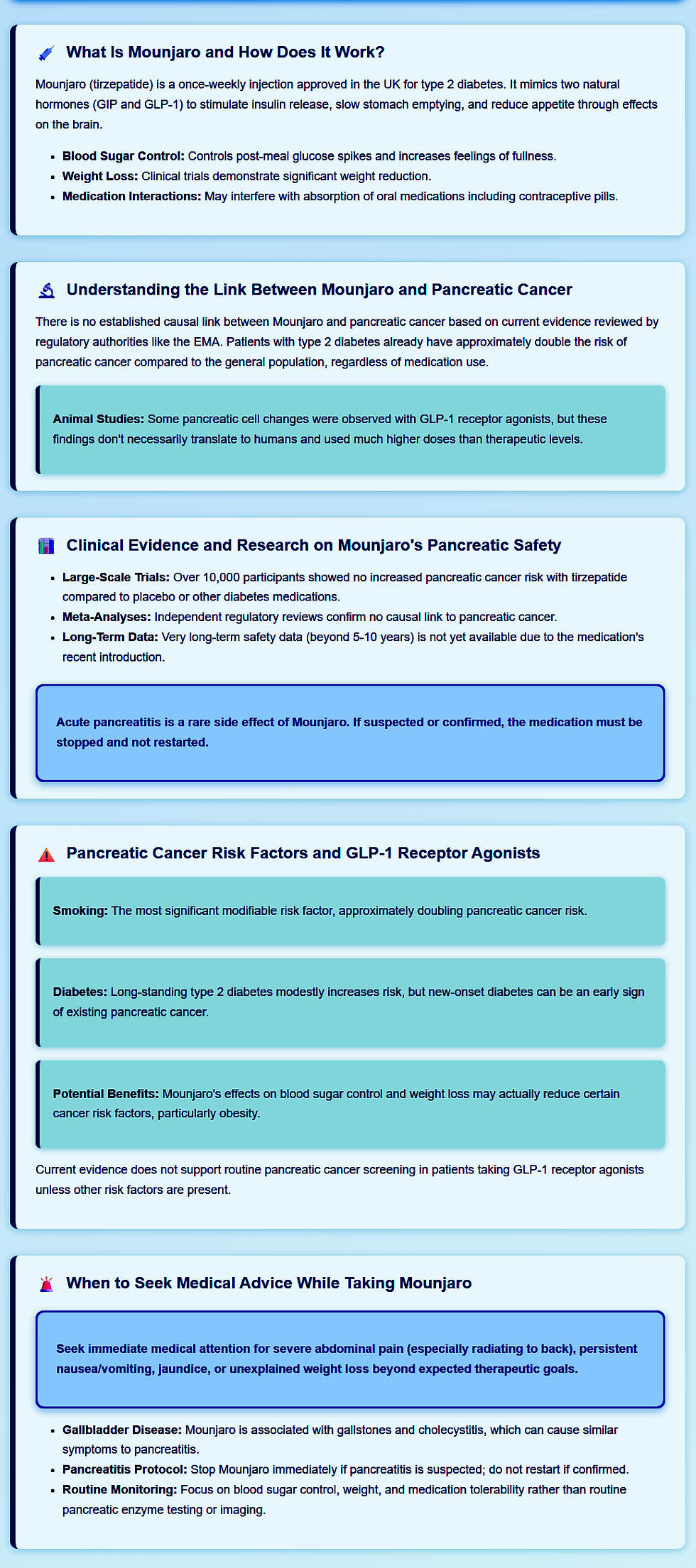
If you have any concerns or questions on the above information, please let us know.
Thanks for reading!


Comments